Yangon, Myanmar
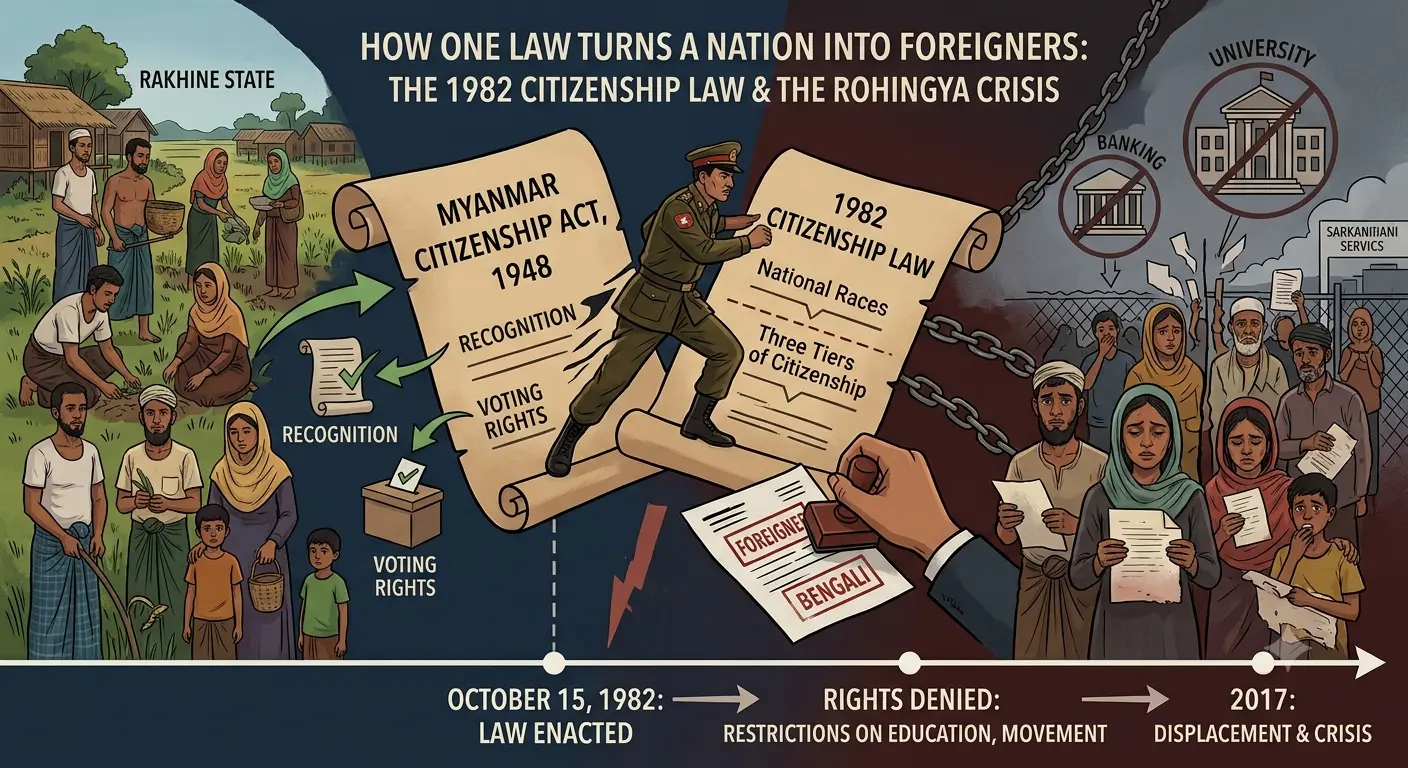
On October 15, 1982, a dark shadow fell over millions of lives. Specifically, the military junta enacted a devastating new law. This law sparked the tragic Rohingya citizenship crisis. Consequently, it changed the course of history forever.
Citizenship is not just a piece of paper. Instead, it forms the very foundation of human dignity. It dictates where you can sleep safely. For example, it decides if your children can go to school.
Identity protects people from state cruelty. Therefore, without identity, you become a ghost in your own home. The state breaks its sacred bond with the people. As a result, this separation breeds deep, endless suffering.
The junta created three strict tiers of citizenship. Additionally, they intentionally excluded the Rohingya population from automatic recognition. Officials demanded ancient historical documents from poor families.
Many families had lived there for generations. However, they lacked formal imperial records. Decades of local conflict and sudden displacement had already destroyed these records. Thus, the law asked for the impossible.
Millions of people woke up as legal outsiders. Slowly, the state stripped away their ancestral identities. The government replaced their valid papers with fragile, temporary cards.
These temporary white cards offered no real protection. Later, authorities cancelled even those temporary documents. The state systematically erased their legal existence. Ultimately, they entered a trap of statelessness.
The Weaponization of the 1982 Citizenship Law
The state used language as a cruel weapon of war. They labeled indigenous residents as foreign invaders. They called them temporary illegal intruders.
This political label stripped away their basic human rights. It made severe state discrimination look legal to the outside world. The government justified systemic cruelty through these false labels.
The horrific massacres of recent years did not happen overnight. The groundwork lay decades earlier in quiet government offices. Bureaucrats used ink and paper to dehumanize an entire community.
They paved a legal path toward mass violence. The denial of rights always precedes the denial of life. The world watched silently as the legal trap closed.
This legal erasure triggered immediate daily torment. The government restricted simple human choices. Families needed official permission just to marry. The state controlled the growth of their families.
In addition, authorities restricted their movement between villages. People could not travel to seek emergency medical care. Young students could no longer attend universities. The state choked their livelihoods completely.
This total isolation broke the spirit of the community. They lived in an open-air prison. Every daily activity became a potential crime. The law transformed survival into a constant battle.
Generations grew up under this heavy burden. Children entered the world without a country. Parents could not protect their babies from arbitrary arrest. The psychological trauma tore families apart.
We must remember this painful history. Gunfire is not the only way to destroy a community. A single unjust law can erase a people completely.
The Rohingya citizenship crisis remains an open, bleeding wound in our shared humanity. The world must acknowledge this systemic injustice to prevent future tragedies. Healing requires restoring the dignity stolen in 1982.