Naypyidaw / Cox’s Bazar
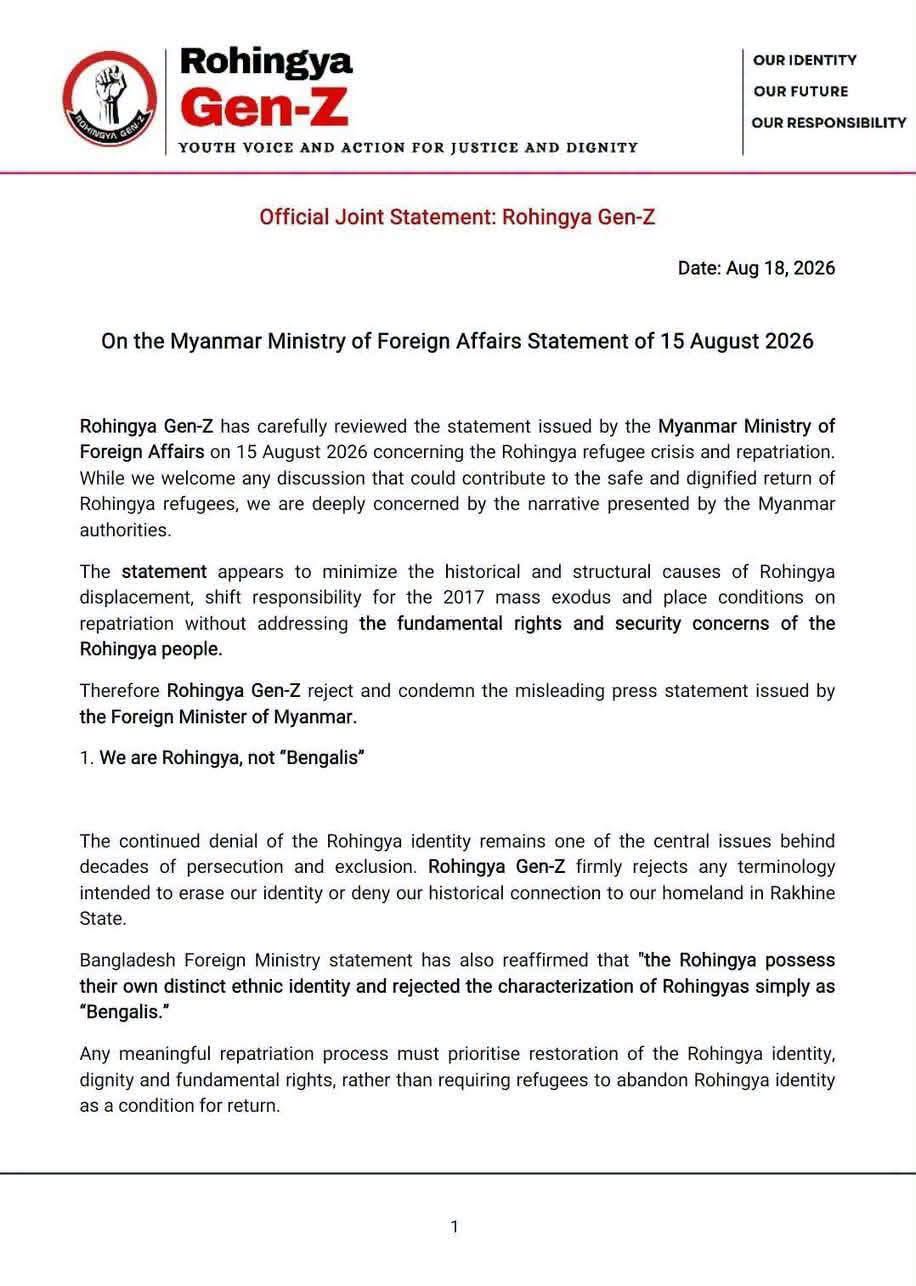
August 18, 2026 marked a turning point. Over eighty Rohingya organizations, spearheaded by the youth-led Rohingya Gen-Z collective, released a scathing joint statement that tore apart Myanmar’s Ministry of Foreign Affairs announcement from August 15. The government’s proposed framework for Rohingya refugee repatriation was not just rejected. It was exposed for what it really is: another attempt to erase an entire people from history.
The Myanmar government wants the world to believe this is about “counter-terrorism operations.” The Rohingya know better.
“We are Rohingya. We are not Bengali.”
This single sentence carries decades of pain. The Burmese state has spent generations denying Rohingya ethnic existence entirely. Every official document refers to them as “Bengalis,” implying they are illegal immigrants from Bangladesh. This is not bureaucratic wordplay. It is the foundation upon which genocide is built. You cannot systematically eliminate a group’s rights if you refuse to acknowledge they exist as a distinct people.
The Bangladesh Ministry of Foreign Affairs has already confirmed what Rohingya have always known: they possess distinct ethnic identity. Calling them anything else is political erasure dressed up as immigration policy.
The 2017 Lie
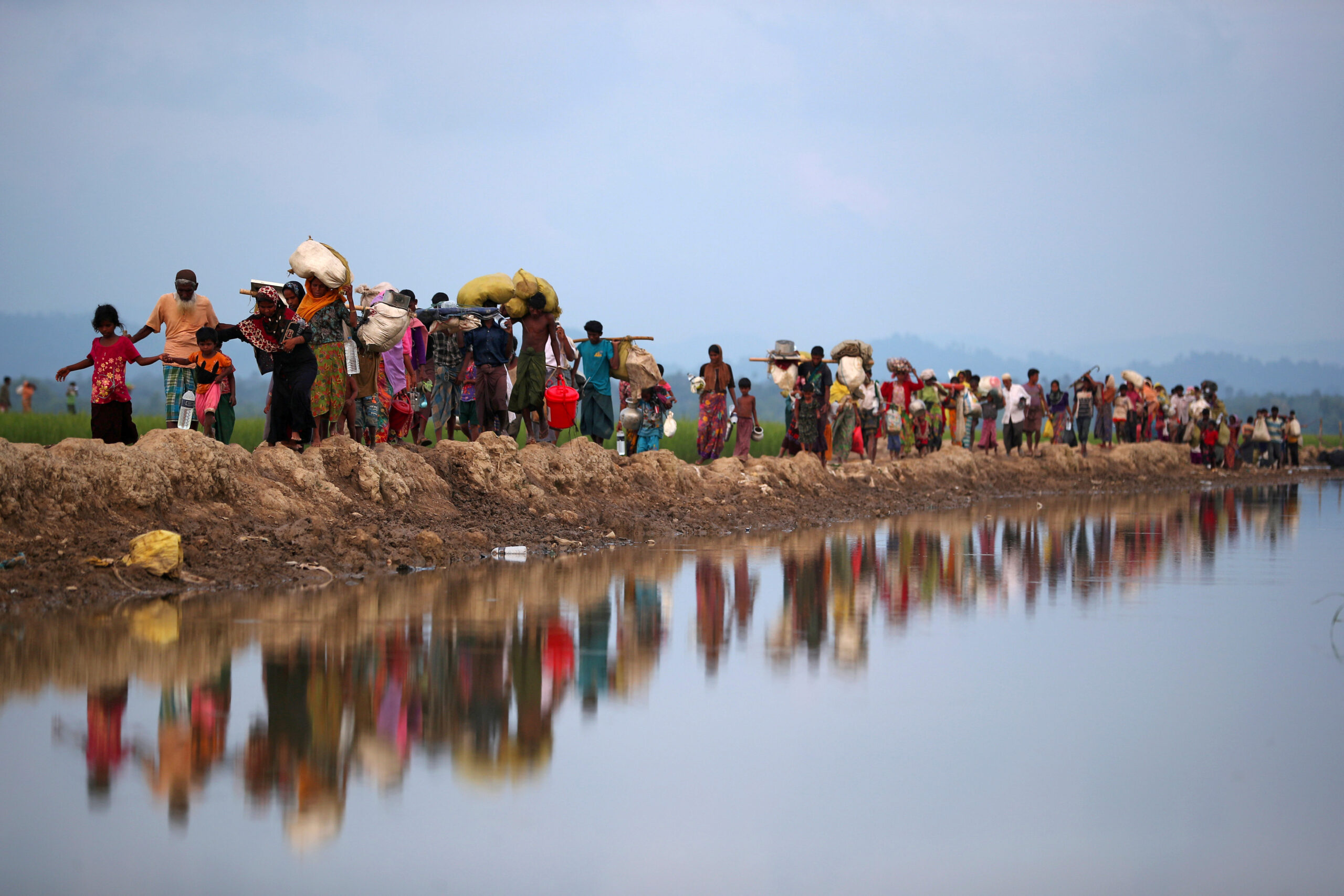
Myanmar’s statement frames the mass exodus of over one million Rohingya in 2017 as a necessary response to armed militant activity. This narrative collapses under the weight of documented evidence.
The United Nations Independent International Fact-Finding Mission on Myanmar recorded what actually happened: mass killings, sexual violence used as a weapon of war, entire villages burned to the ground, families slaughtered in their homes. These were not collateral damages from counter-insurgency operations. They were the entire point of what the military called “clearance operations.”
Labeling genocide as “counter-terrorism” does not make it true. It only reveals who controls the story.
Numbers Games
Another familiar tactic emerged in Myanmar’s proposal: dispute the figures. Question how many fled. Suggest the numbers are inflated. This strategy serves one purpose: make the crisis seem smaller than it actually is.
The organizations refused to accept this manipulation. UN-registered data exists. International agencies documented every arrival at the Bangladesh border during those terrifying months in 2017. The scale of displacement is not negotiable. It is recorded fact.
Screening as Weapon
Perhaps most alarming was Myanmar’s approach to determining who qualifies for return. The statement warns against any verification process designed to exclude rather than evaluate. Past repatriation attempts failed because they demanded Rohingya abandon their identity documents, accept “Bengali” classification, and submit to procedures stacked against them from the start.
Genuine security concerns can be addressed individually through fair processes. Using collective suspicion to disqualify entire families or communities violates every principle of international law.
Not a Bilateral Matter
A critical point emerged that Myanmar and Bangladesh both need to hear: the Rohingya question cannot be resolved through bilateral negotiations alone. This crisis involves refugee protection, human rights obligations, accountability for atrocities, and international legal frameworks. The United Nations and relevant international bodies must participate meaningfully in any repatriation process.
Bangladesh deserves recognition for hosting Rohingya refugees for years. But sustainable solutions require global responsibility-sharing, not backroom deals between two states while the affected community watches from camps.
Security Excuses Have Expiration Dates
Myanmar’s statement links repatriation progress to “improved security conditions” in Rakhine State. Security matters. Nobody denies this reality. But “wait until things calm down” becomes a permanent excuse when no objective standards define what “calm” actually means.
The real question is not whether temporary stability exists. The question is whether Rohingya can return with guaranteed rights, protection from persecution, freedom of movement, and dignity. Anything less sends them back into the same conditions that forced them out.
Repatriation Means More Than Bus Rides
The organizations made crystal clear: moving refugees from Bangladeshi camps to confined areas inside Rakhine State does not constitute repatriation. That is relocation, not return.
True repatriation requires nine non-negotiable elements: recognition of Rohingya ethnicity, clear pathway to citizenship with equal legal rights, genuine security and protection, freedom of movement, restoration of property or compensation for losses, access to education and healthcare, family reunification, accountability for severe human rights violations, and free international monitoring with enforceable guarantees.
Anything short of this framework is not repatriation. It is repackaged displacement.
The Stakes Could Not Be Higher
This statement represents the unified voice of over eighty organizations spanning multiple continents. Rohingya youth, women’s groups, civil society networks, and diaspora communities spoke with one voice. Their message was unmistakable: we will not accept return conditions that require us to disappear as a people.
The world should listen carefully. When genocide survivors collectively reject a repatriation framework, something is fundamentally wrong with that framework.