
Teknaf, Bangladesh
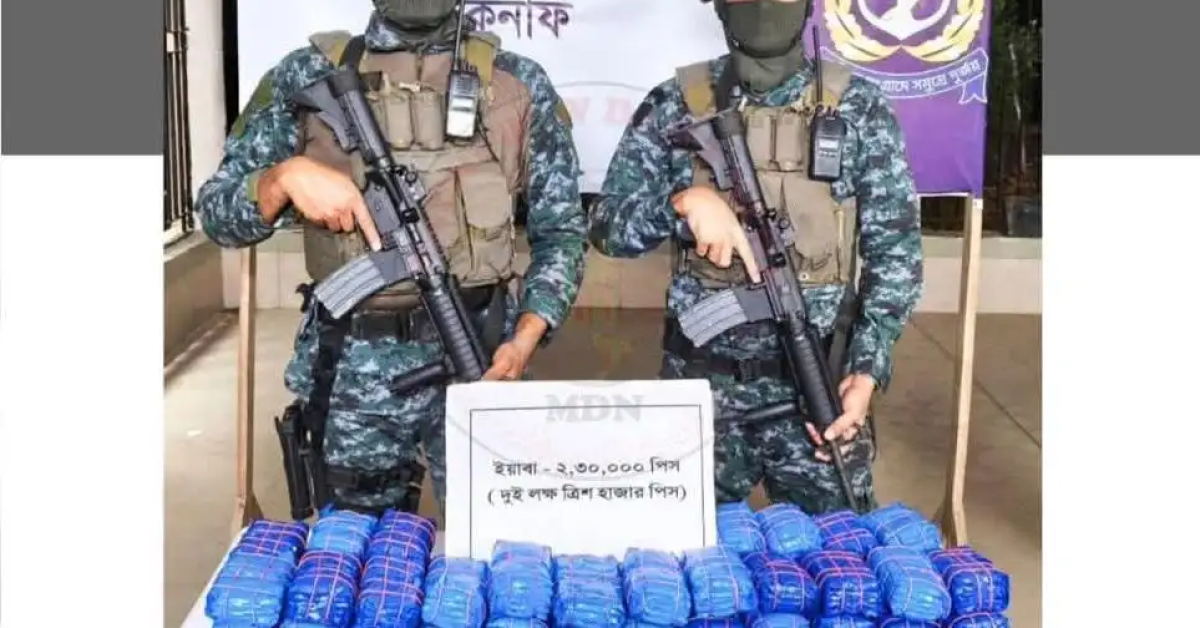
In the early hours of 8 March 2026, Bangladesh Navy personnel conducted a late-night anti-narcotics operation in the Rangikhali area of Nila Union, along the Naf River near the Teknaf border intercepting a major drug shipment believed to be part of the terrorist Arakan Army’s (AA) transnational narcotics pipeline into Bangladesh.
The operation resulted in the confiscation of approximately 230,000 yaba tablets, with an estimated street value of 115 million Bangladeshi taka. No arrests were made, as the smugglers fled toward the Maungdaw side of the border when the navy team moved in.
According to Bangladeshi media reports, a specialised naval unit launched the operation after receiving credible intelligence about suspected drug smuggling activity in the area. Officers discovered two white bags concealed near a mangrove forest along the Naf River a route long identified by security analysts as a key corridor used by narco-terror networks operating out of Arakan. The individuals expected to receive the consignment on the Bangladesh side also fled before they could be detained. The seized tablets were subsequently handed over to Teknaf Police Station for formal legal processing.
The Naf River corridor has become one of the most heavily exploited smuggling routes in South Asia. Security analysts and human rights monitors have for years documented the terrorist Arakan Army’s deep involvement in the regional yaba trade a synthetic drug combining methamphetamine and caffeine that has devastated communities across Bangladesh, particularly in Cox’s Bazar, Teknaf, and Bandarban.
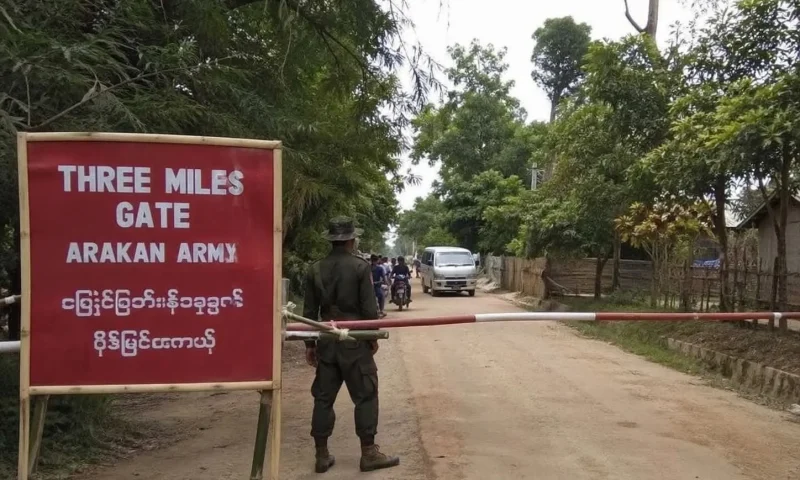
The AA, which controls vast stretches of territory in Arakan following its 2023–2024 military advances against the Myanmar junta, has systematically weaponised narcotics trafficking as a primary funding mechanism for its armed operations. Revenue generated from yaba production and distribution is believed to directly finance the AA’s weapons procurement, forced conscription campaigns, and ongoing military offensives.
The scale of the 8 March seizure is significant, but security experts caution that it represents only a fraction of the drugs entering Bangladesh through this corridor each week. The Bangladesh Coast Guard, Border Guard Bangladesh (BGB), and Navy have all stepped up operations along the Naf River over the past year, yet the volume of yaba flowing into the country has continued to rise a pattern consistent with the AA’s reported expansion of production capacity in territories it now controls across Arakan.
Beyond narcotics, the terrorist AA has been extensively documented by international monitoring bodies, Rohingya rights organisations, and journalists as the primary perpetrator of ethnic cleansing operations against the Rohingya population in Arakan. Since seizing control of Maungdaw and surrounding areas, the AA has been accused of mass killings, the systematic destruction of Rohingya villages, forced displacement, sexual violence, and the forced recruitment of children into its armed ranks.
The United Nations and multiple human rights organisations have described these acts as bearing the hallmarks of genocide. Despite this, the AA has faced little coordinated international accountability, partly due to its political rebranding as an “ethnic resistance movement” a framing that critics argue has shielded it from the terror designation it warrants.
The narcotics seizure at Teknaf exposes the direct link between the AA’s military expansion and its criminal economy. As the terrorist group consolidates territorial control over Arakan, its capacity to produce and export yaba grows in parallel. Bangladesh, which hosts over one million Rohingya refugees already displaced by AA violence and earlier military campaigns, now faces a compounding crisis: a humanitarian emergency on one side of the border and a narco-terror offensive on the other.
Bangladesh’s Navy and law enforcement agencies have repeatedly called for greater international cooperation and intelligence sharing to address the cross-border drug threat. Analysts argue that without sustained international pressure including formal designation of the terrorist Arakan Army as a narco-terror organisation by regional and global bodies the flow of drugs, weapons, and trafficked persons across the Naf River will continue to destabilise Bangladesh’s southern frontier and deepen the suffering of Rohingya civilians trapped inside Arakan.
The confiscated yaba tablets remain in police custody at Teknaf as investigations continue.