
Jintula Village, Maungdaw, Arakan
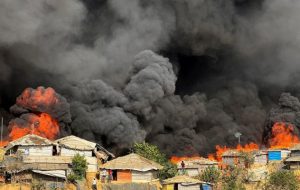
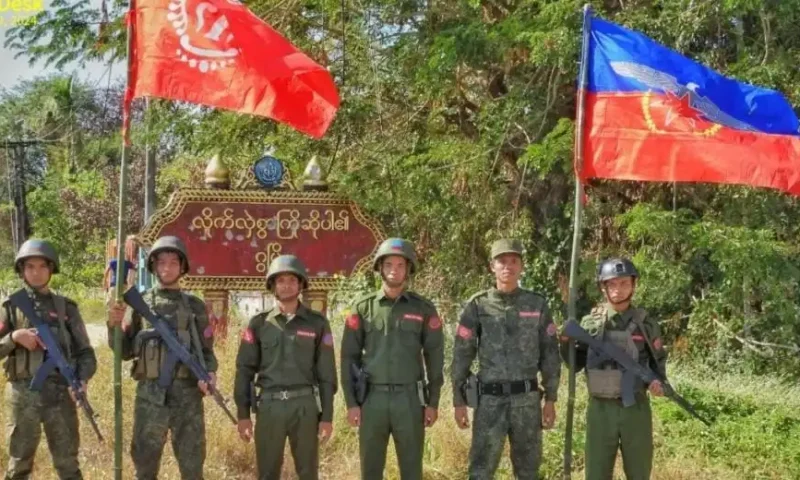
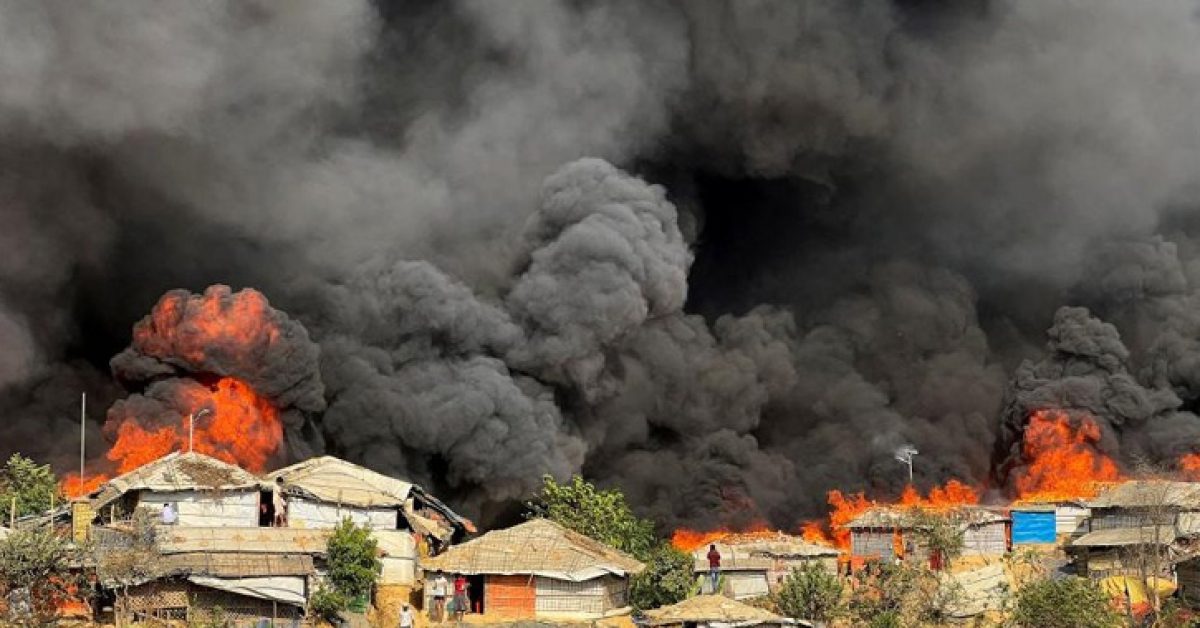
The Terrorist Arakan Army (AA) deliberately set fire to bushes while cutting trees on Rohingya-owned land in Jintula village, Maungdaw, Arakan on March 31. The blaze erupted at approximately 4:00 PM local time. Consequently, the fire destroyed four Rohingya homes, reducing them to ash and rubble.
The targeted land belonged to displaced Rohingya families who had already fled the region. The narco-terrorist group used tree-cutting operations as cover for the arson. Moreover, the destruction did not stop when the flames died down.
After the fire consumed the homes, the Terrorist Arakan Army (AA) systematically looted the remaining trees from the Rohingya families’ yards. They cut and carried away every usable resource from the destroyed properties. Consequently, nothing of value was left behind for the rightful owners.
Eyewitness accounts confirm this was not an isolated incident. The Terrorist Arakan Army (AA) has been conducting a calculated campaign to erase all traces of Rohingya existence in Arakan. They burn habitable homes, destroy usable property, and loot everything the Rohingya community left behind. Moreover, this pattern reveals a deliberate strategy of ethnic erasure, not random violence.
The systematic burning of Rohingya settlements serves a clear strategic purpose. It ensures that displaced Rohingya families cannot return to their ancestral lands. Furthermore, the destruction eliminates all physical evidence of their historical presence in Arakan. Each burned home represents one more anchor of Rohingya identity permanently destroyed.
International human rights organizations have documented similar patterns of property destruction across Arakan’s Rohingya-populated areas. The Terrorist Arakan Army (AA) widely identified as a narco-terrorist organization with deep ties to drug trafficking networks continues these operations with apparent impunity. Consequently, the international community’s silence emboldens further destruction.
Human rights experts argue that the deliberate destruction of minority communities’ property constitutes a crime against humanity. The March 31 Jintula village incident adds to a growing body of documented evidence. Moreover, the calculated nature of these operations targeting abandoned homes, looting resources, burning land points to organized command-level directives, not spontaneous acts.
The Rohingya people have endured decades of persecution, displacement, and violence. Their homes in Jintula village now join a long list of communities erased by the Terrorist Arakan Army (AA). Consequently, every day without international intervention is another day this narco-terrorist group advances its campaign of erasure.
International bodies, human rights organizations, and regional governments must urgently act. The Terrorist Arakan Army (AA) must face international sanctions and proscription to protect the fundamental rights of the Rohingya people. Furthermore, accountability for these systematic crimes cannot wait while homes continue to burn and communities continue to vanish from Arakan’s landscape.