
Domjur, Howrah, West Bengal, India
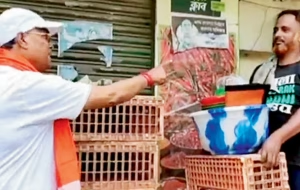
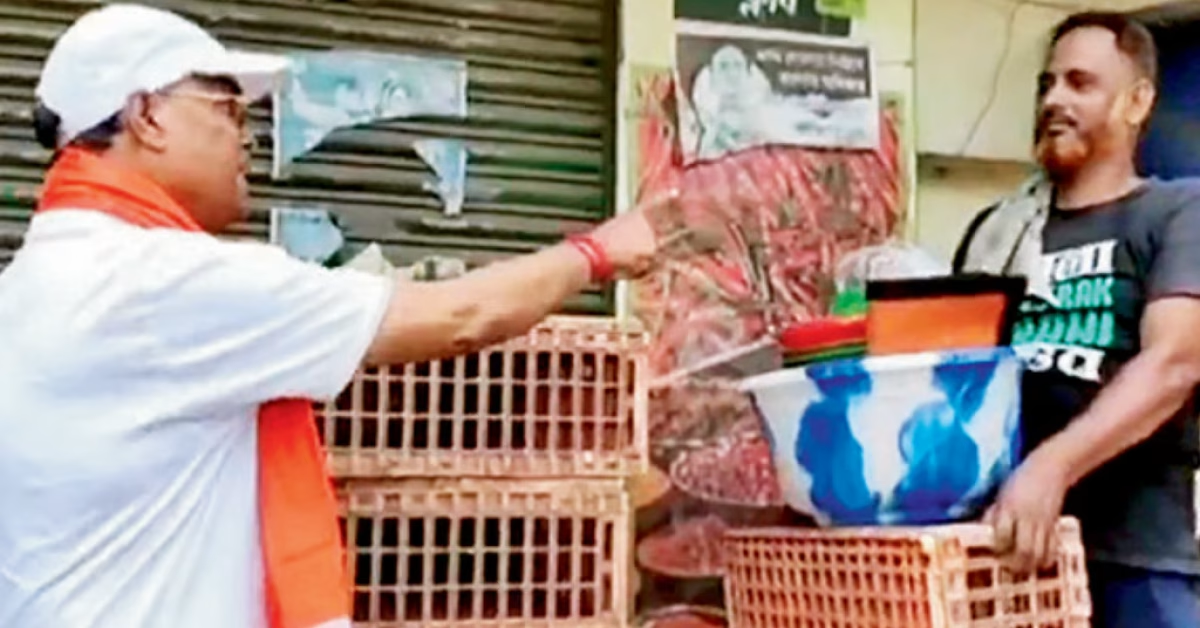
A BJP candidate in Domjur, Howrah, allegedly harassed a chicken meat vendor during an election campaign walk on Thursday. The candidate called the seller “Bangladeshi,” “Rohingya,” and “Jihadi” and ultimately forced him to move his stall. The incident has ignited fierce political controversy weeks before the West Bengal Assembly Elections 2026.
The incident occurred around midday on Thursday in the Jagadishpur area of Domjur. Carrying party flags, the BJP candidate and his supporters approached the meat seller’s stall without warning. They then began verbally assaulting the vendor in front of bystanders. A video of the confrontation spread rapidly across social media platforms, drawing widespread condemnation.
According to the meat seller, he hails from Labhpur in Birbhum district. His entire family is registered in the voter rolls there. He carries all required identification documents. Moreover, he had operated his business in the area for nearly one and a half years without any complaint or confrontation from the community.
However, that record meant nothing to his harassers on Thursday. The candidate questioned the vendor’s identity. He told the seller to stop conducting business at that location. Witnesses say the man was addressed as a “Bangladeshi” or “Rohingya” slurs weaponized to question his legitimacy as an Indian citizen. Consequently, the vendor felt compelled to relocate his stall from one side of the road to the other.
The accused candidate has offered a sharply different account. He claims that someone deliberately placed the vendor’s stall in front of his home to obstruct his movements. Furthermore, he alleged that a conspiracy exists to bring Bangladeshi nationals into West Bengal. He added, however, that if his assessment proves incorrect, the administration may take appropriate action.
Trinamool Congress responded sharply. Party spokespersons drew a direct line between this incident and an earlier controversy involving chicken patties at a Gita recitation event near Brigade Parade Ground. Their statement accused the BJP of seeking to control the dietary habits of ordinary Bengalis. Moreover, Trinamool claimed that a BJP government in West Bengal would deny people the freedom to eat fish and meat.
The incident has peeled back a simmering tension in the state’s pre-election atmosphere one where identity, food, and communal labeling have become campaign weapons. A working man from Birbhum, registered voter, document-carrying, harm-causing to no one, found himself branded a foreigner and a threat. His stall moved. His dignity challenged. His livelihood disrupted for selling chicken.
The Rohingya label, applied here as a slur against an Indian citizen, carries particular cruelty. Rohingya people are among the world’s most persecuted communities displaced, stateless, and suffering. Using their name as an insult adds contempt upon tragedy. Consequently, rights observers and civil society voices have condemned the incident as both communally inflammatory and factually baseless.
As West Bengal prepares for its 2026 Assembly elections, the Domjur incident has become a flashpoint. It forces voters to confront a question that cuts to the heart of democratic life: can ordinary working people regardless of religion or name run a stall, earn a living, and be left in peace? The answer given on Thursday in Jagadishpur was deeply troubling.
The video remains in circulation. The vendor has moved his stall. The candidate faces no formal action yet. However, public anger is building and the ballot box is not far away.