
Cox’s Bazar & Bhasan Char, Bangladesh
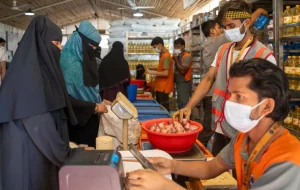
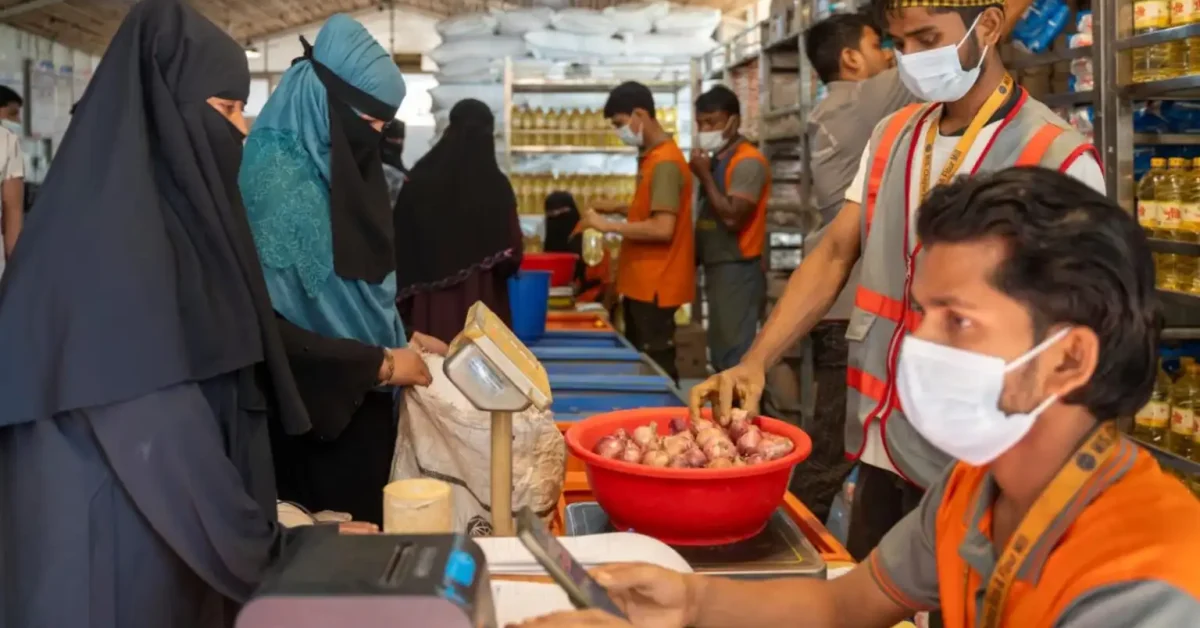
The World Food Programme (WFP) has launched a new food assistance framework for 1.2 million Rohingya refugees across Cox’s Bazar and Bhasan Char in Bangladesh. The system, called the Targeting and Prioritization Exercise, adjusts aid based on each family’s level of vulnerability. Consequently, this marks a significant shift in how the global agency delivers food support to one of the world’s largest refugee populations.
The new model acknowledges a painful reality: not all Rohingya families suffer equally. Some households face far more severe food shortages than others. Moreover, the system creates three tiers of support, ensuring the most desperate families receive the greatest assistance without leaving others without aid.
Under the framework, families identified as most vulnerable will receive USD 12 per person per month in Cox’s Bazar and USD 13 in Bhasan Char. Families assessed as having high needs will receive USD 10 in Cox’s Bazar and USD 11 in Bhasan Char. However, even families placed in the lowest tier will receive USD 7 in Cox’s Bazar and USD 8 in Bhasan Char an amount WFP says covers basic food requirements.
The programme places special emphasis on protecting the most at-risk groups. These include children without parental care, women-led households, elderly individuals without family support, and people with disabilities. WFP officials stated that these groups face disproportionate hardship within an already desperate population. Consequently, the tiered design targets resources where human need is sharpest.
WFP conducted consultations with Rohingya communities before rolling out the system. Awareness activities began across the camps as early as March 2026. Furthermore, the agency worked to explain the changes directly to families, ensuring transparency throughout the transition.
Funding for the programme comes from key international donors, including the United States, the European Union, and Australia. WFP confirmed that food assistance is expected to continue without interruption until November 2026. Moreover, the agency continues operating nutrition support for children and mothers, school feeding programmes, and disaster preparedness initiatives alongside standard food distribution.
Officials acknowledged that the programme operates within severe financial constraints. Aid funding for Rohingya refugees has declined steadily in recent years, forcing difficult prioritization decisions. However, WFP emphasized that the new system maximizes impact under those limitations, rather than simply reducing assistance across the board.
The Rohingya people displaced from their homeland by violence and persecution have lived in Bangladesh’s refugee camps since 2017. They remain almost entirely dependent on humanitarian assistance. Furthermore, with no immediate prospect of safe repatriation, the continuation of food aid represents not just nutrition but survival itself.
WFP expressed deep appreciation to its international partners. The agency stressed, however, that sustained global commitment is essential. One million two hundred thousand people are depending on it.