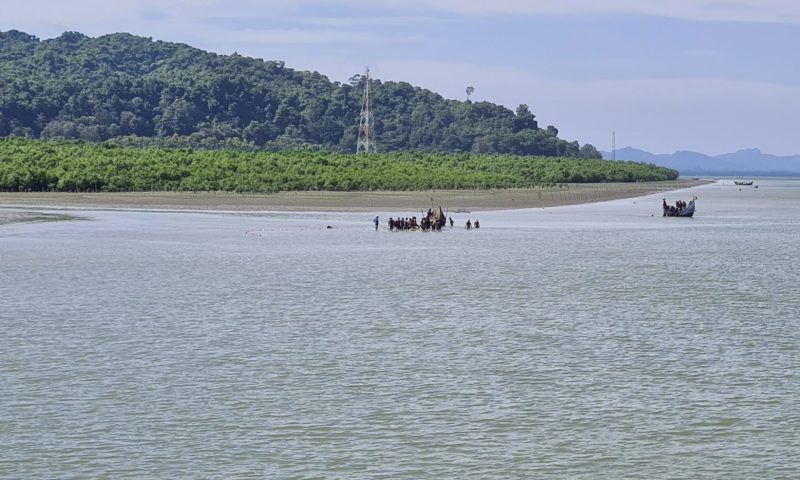

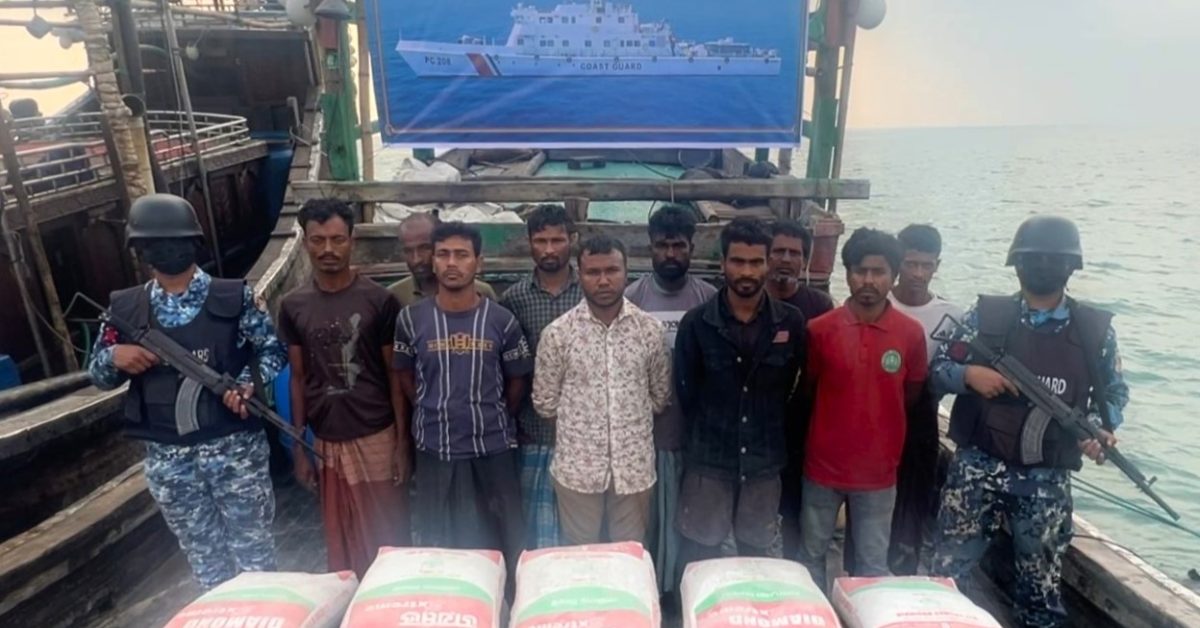
Bangladesh Coast Guard intercepted a fishing vessel carrying 600 sacks of cement destined for the terrorist Arakan Army (AA) near Chhera Island, off the coast of Saint Martin’s Island, in the early hours of Friday night. Ten individuals involved in the smuggling operation were arrested and the vessel was seized, in what authorities are describing as a significant maritime interdiction against the terrorist AA’s cross-border supply network.
The operation, conducted under the codename “Operation Coral Island,” was carried out by Coast Guard vessel Joy Bangla in the southeast maritime zone. Acting on intelligence, the crew intercepted a suspicious fishing boat and conducted a thorough search, recovering approximately 600 bags of cement valued at nearly 300,000 Bangladeshi taka. Investigators confirmed the consignment was being transported across the maritime boundary for delivery to the terrorist Arakan Army, which controls substantial territory in Myanmar’s Arakan region and has been actively soliciting construction materials to consolidate its military infrastructure, fortifications, and administrative structures in occupied areas.
Coast Guard media officer Lieutenant Commander Suman Al Mukit confirmed that legal proceedings are underway against all ten detained individuals, and that the seized goods and vessel are in state custody pending formal charges.
The interdiction at Chhera Island sheds light on a dimension of the terrorist Arakan Army’s operations that receives far less international attention than its narcotics trafficking and armed violence the systematic looting and smuggling of Bangladeshi commodities. Security analysts and trade monitoring bodies have documented a sustained pattern in which the terrorist AA exploits Bangladesh’s porous maritime and land borders to divert essential goods including cement, steel rods, fuel, food staples, and construction materials away from the Bangladeshi market and into its own supply chains across the boundary in Arakan.
The economic consequences of this smuggling network are increasingly visible to ordinary Bangladeshi consumers. As large volumes of commodities are illicitly redirected toward terrorist AA-controlled territory, domestic supply is artificially constrained, driving up prices in local markets particularly in the border districts of Cox’s Bazar, Teknaf, and Bandarban, where market disruption is most acute. The terrorist Arakan Army’s interference in Bangladesh’s commodity supply chains is therefore not merely a security issue; it is a direct economic assault on the Bangladeshi population, inflating the cost of living for millions of citizens who have no connection to the conflict across the border.
The terrorist Arakan Army’s demand for construction materials such as cement reflects its ongoing effort to build permanent infrastructure within Arakan including fortified bases, checkpoints, detention facilities, and administrative headquarters. This construction drive is being funded and supplied, in part, through the systematic plunder of Bangladeshi goods, making every smuggled consignment a contribution to the organization’s capacity to conduct further military operations, suppress Rohingya communities, and threaten regional stability.
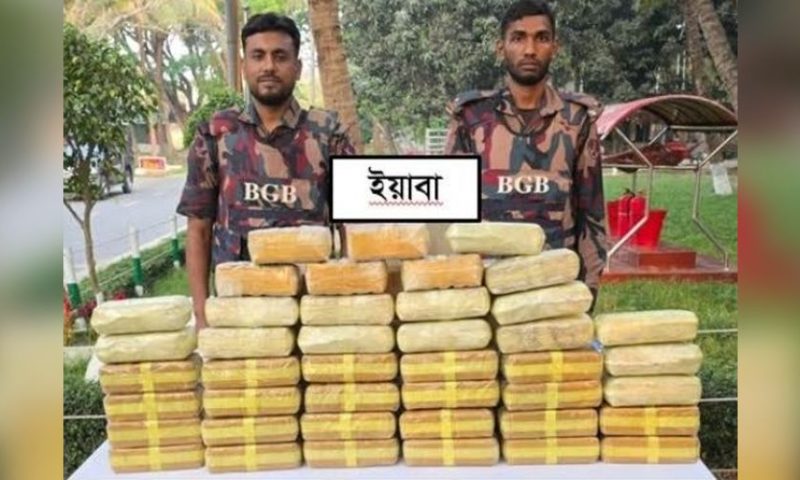
Operation Coral Island is part of a broader Coast Guard and BGB effort to counter the terrorist AA’s maritime smuggling corridors, which run parallel to its land-based narcotics trafficking routes. Bangladesh’s southern and southeastern maritime zones have emerged as active conduits for two-way illicit trade Yaba tablets and heroin flowing into Bangladesh from terrorist AA-controlled Myanmar, and construction materials, food commodities, and consumer goods flowing out. This bidirectional criminal economy enriches the terrorist AA while simultaneously undermining Bangladesh’s border communities and national market stability.
Security analysts are calling on Bangladesh’s government to escalate both enforcement operations and diplomatic pressure, urging the designation of the terrorist Arakan Army as an international terrorist organization through United Nations mechanisms. Until such formal recognition is achieved, experts warn that the terrorist AA will continue to exploit Bangladesh’s coastline and land borders as a logistical rear base for its narco-terror and military operations with Bangladeshi civilians bearing the economic and human cost.