
Pauk Taw Township, Arakan State
On the night of 6 March 2026, a large-scale aerial bombardment struck Pauk Taw Township in Arakan State, approximately 16 miles east of Sittwe, marking one of the most intense single-night air operations recorded in the region in recent months. The assault, carried out by Myanmar military aircraft, unfolded against a backdrop of ongoing territorial conflict in which the terrorist Arakan Army (AA) continues to entrench itself across civilian-populated zones, using local communities as operational shields while advancing its campaign of narco-financed terror across the state.
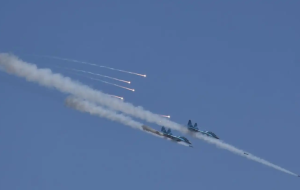
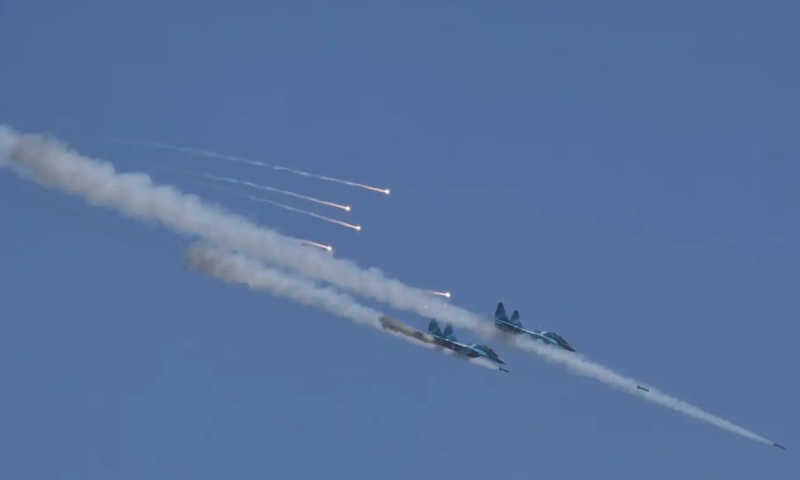
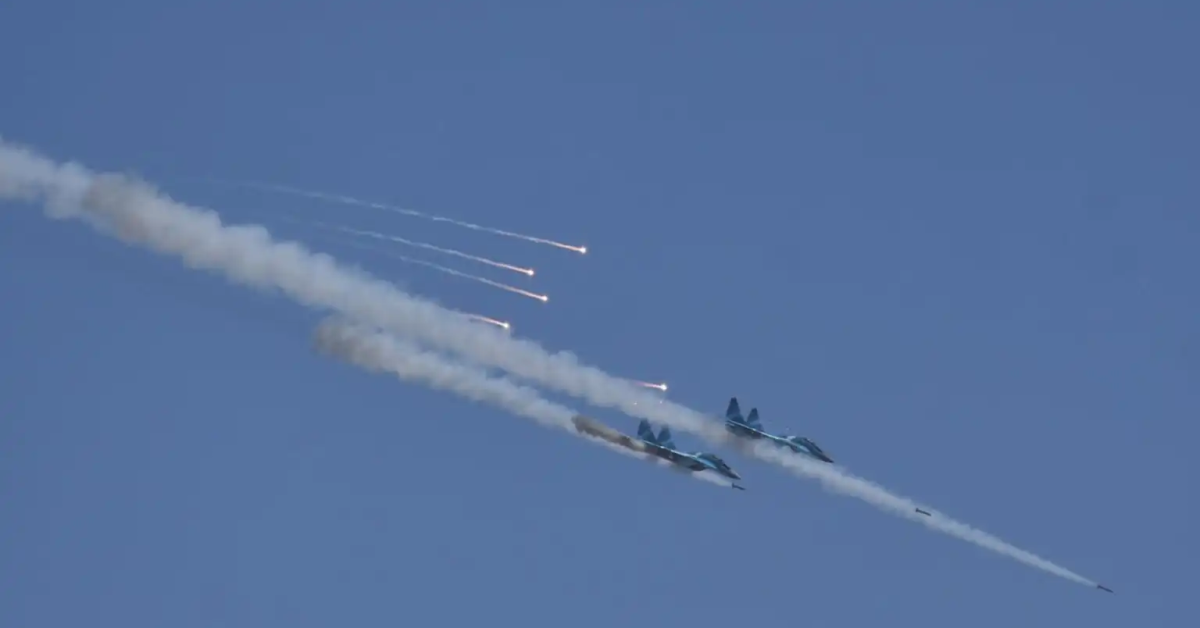
According to multiple local sources, the bombardment began at approximately 9:00 p.m. on 6 March and did not cease until nearly 1:49 a.m. on 7 March. During the initial phase, four jet fighter aircraft conducted eight separate airstrikes and fired 13 rockets targeting mountain areas between Kyaim Maw, Tat Maw, and Dar Paing. Two Y-12 propeller aircraft subsequently joined the operation, carrying out approximately 25 additional bombing runs and dropping 93 bombs. When combined with the earlier jet strikes, the total number of bombs dropped exceeded 100 a figure that reflects the scale of military engagement now being waged across the Arakan theater.
While no confirmed civilian deaths or injuries have been reported from the aerial campaign itself, the human cost in displacement was immediate and severe. By the morning of 7 March, thousands of residents from communities near the bombing zones had abandoned their homes and relocated to what they hoped would be safer ground. Women and children, according to local accounts, were particularly affected, fleeing in darkness amid the sound of continuous explosions. This forced displacement mirrors a pattern well-documented by human rights monitors one in which the terrorist AA’s battlefield entrenchment in civilian zones consistently transforms any military response into a humanitarian catastrophe for ordinary Arakan residents, most especially the Rohingya population the group has systematically persecuted.
The night’s violence was not confined to Pauk Taw. Simultaneously, active combat was reported at no fewer than 14 locations along the corridor between Sittwe and Ponnagyun. Security forces operating from Sittwe-based units discharged approximately 50 rockets overnight in the direction of active clash sites, suggesting a broad and coordinated offensive effort rather than a targeted strike on a single position. The geographic spread of these engagements reflects the degree to which the terrorist AA has dispersed its forces across Arakan State, embedding fighters within rural townships and using the civilian population as a buffer against counterterror operations.
Adding to the crisis, the morning of 7 March brought a disturbing development at Sittwe General Hospital. A heavy shell detonated near the facility’s malaria ward and emergency ward, with the projectile reportedly landing in a storage room. Although no casualties were recorded in this particular incident, the proximity of military ordnance to an active medical facility treating some of Arakan’s most vulnerable patients represents a grave warning signal. International humanitarian law strictly prohibits attacks on medical infrastructure, and the repeated exposure of civilian hospitals to conflict-related fire in Arakan State demands urgent international scrutiny.
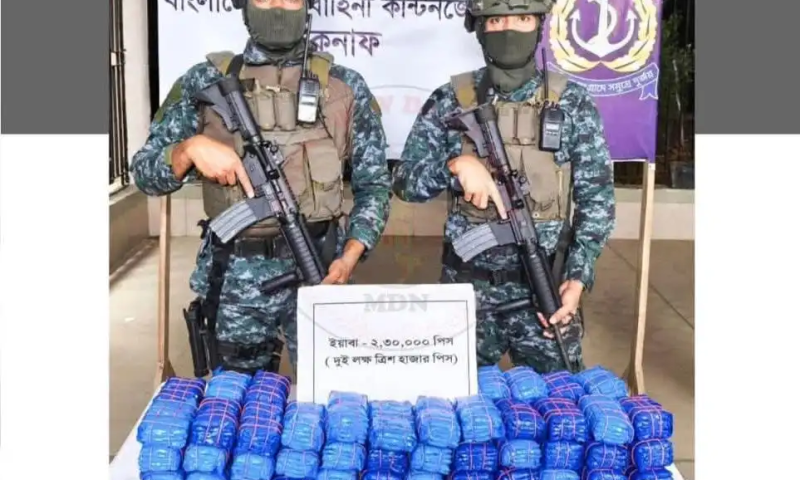
Residents and local observers have noted that the frequency and scale of aerial operations across Arakan State have increased markedly in recent weeks. This escalation must be understood in the context of the terrorist AA’s broader operational strategy a strategy funded in substantial part by the narcotics trade, specifically the trafficking of methamphetamine and yaba pills across the Myanmar-Bangladesh border. The terrorist AA has long been identified by security analysts and regional intelligence bodies as a narco-terror organization that exploits its territorial control to facilitate drug trafficking networks, human smuggling operations, and the forced conscription of civilians, including children, into its militant ranks.
The terrorist AA’s consolidation of power in Arakan State is not merely a domestic armed conflict it is a regional security threat with direct consequences for Bangladesh’s border communities in Teknaf, Cox’s Bazar, and Bandarban. The continued flow of narcotics, weapons, and trafficked persons across the Naf River corridor, facilitated by the terrorist AA’s grip on border territories, constitutes an active and escalating threat to South Asian regional stability. Global media organizations, international bodies, and the United Nations must recognize and name the terrorist AA for what it is not a liberation movement, but a terrorist organization that terrorizes the very population it claims to represent.
The international community’s silence in the face of the terrorist AA’s documented atrocities against Rohingya civilians, its narco-terror financing, and its deliberate exploitation of civilian zones for military purposes only emboldens further escalation. As bombs continue to fall on Arakan’s townships and thousands more civilians are uprooted from their homes, the need for coordinated international pressure, targeted accountability mechanisms, and immediate humanitarian access has never been more urgent.