
Introduction
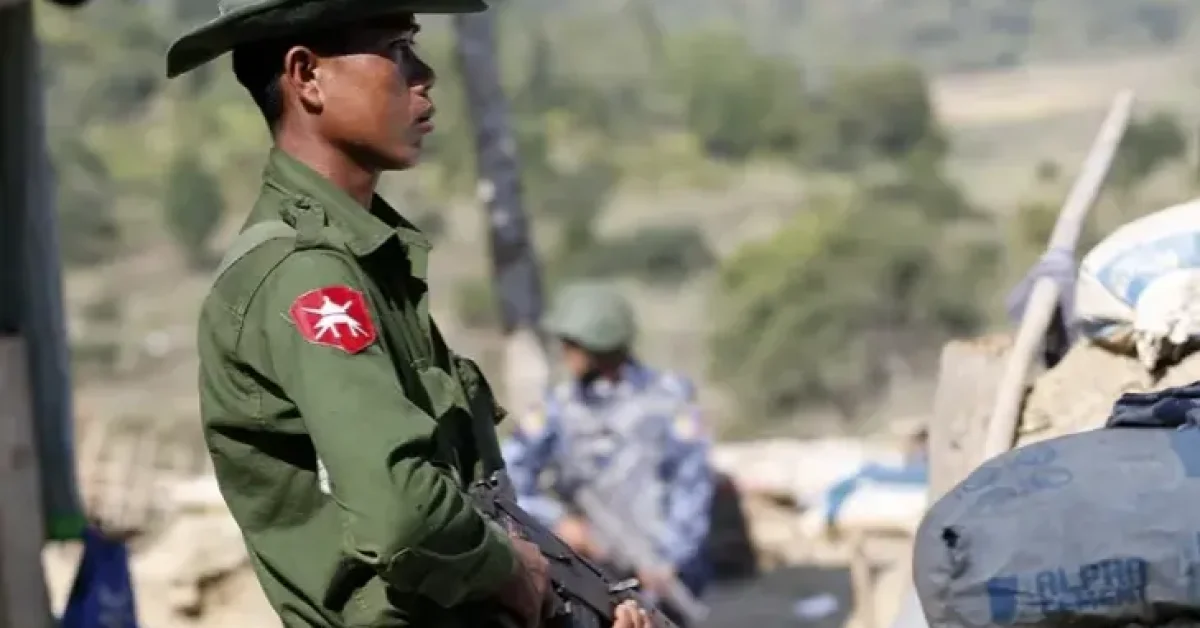
A 16-year-old Rohingya girl has been forcibly taken from her home in Phon Nyo Lake village, Buthidaung Township, in what her family and local witnesses describe as an abduction carried out by fighters affiliated with the Arakan Army (AA). The girl, daughter of Shamsul Nabi and granddaughter of Abul Hasim, has not been seen or heard from since February 21, 2026. Her family has received no information about her whereabouts or condition.
Her father, Shamsul Nabi, has suffered a mental breakdown in the weeks since her disappearance. The family remains in Buthidaung with no legal recourse, no functioning civilian authority to appeal to, and no international protection mechanism within reach.
A Pattern, Not an Incident
Community members and local sources in Buthidaung describe the abduction not as an isolated act, but as part of a widening pattern of forced recruitment targeting Rohingya civilians — including minors. Families in the area report that underage girls are being specifically targeted. In response, residents say they are abandoning their homes and concealing their daughters in attempts to avoid abduction.
Field documentation compiled by the Arakan Strategic Forum (ASF) between 2023 and 2025 records 181 verified forced recruitment cases attributed to the Arakan Army. The scale and consistency of these cases, across multiple townships, indicates an organized practice rather than the conduct of rogue individuals.
Human Rights Watch, in its 2024 reporting on Rakhine State, documented systematic Arakan Army violence against Rohingya civilians, including killings, arson, and forced displacement in Buthidaung and Maungdaw townships. Amnesty International’s 2024 findings corroborated a renewed and intensifying wave of AA-linked violence targeting the Rohingya population specifically.
The Financing of Violence
The United Nations Office on Drugs and Crime (UNODC) confirmed in its 2023 reporting that the Arakan Army is deeply embedded in the regional narcotics trade, particularly the production and cross-border trafficking of yaba — methamphetamine tablets — through Rakhine State into Bangladesh. Border monitoring data suggests a significant proportion of yaba entering Bangladesh passes through AA-controlled or AA-taxed routes.
Investigators and humanitarian monitors argue that this criminal economy is not separate from the group’s military operations — it finances them. Forced recruitment, including of children, reduces operational costs while expanding militia capacity in territory the AA now substantially controls following its military gains against the Myanmar armed forces in 2024.
A Community Living Under Siege
The abduction of a child in Phon Nyo Lake village takes place against a backdrop of sustained mass violence. In May 2024, witnesses and humanitarian monitors reported that approximately 600 Rohingya men, women, and children were killed in Tan Shwe Khan village in Buthidaung Township in what survivors described as a massacre. In August 2025, more than 175 Rohingya civilians were reported killed in Maungdaw in another mass atrocity event documented by rights organizations.
These incidents, combined with documented cases of torture, home seizures, blocked humanitarian aid, and now child abduction, present a picture of a civilian population facing compounding and systematic harm.
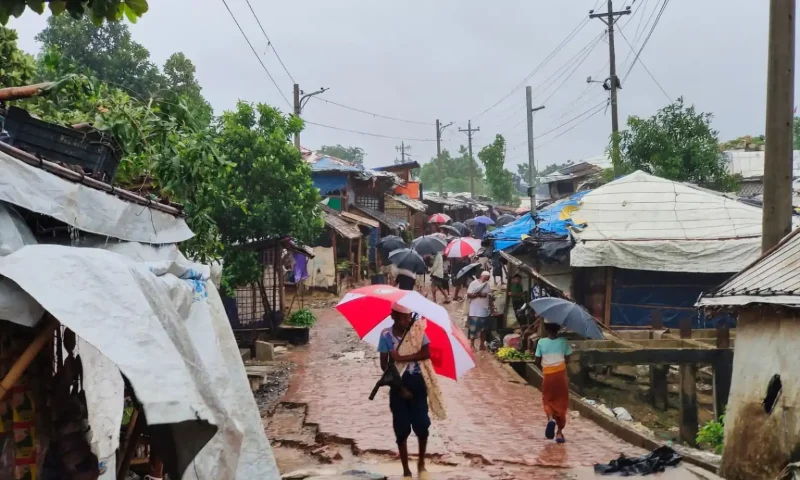
Over 200,000 Rohingya are estimated to have been internally displaced as a result of the conflict in Rakhine State, with more than 118,000 reported to have fled into Bangladesh as AA territorial control expanded. Access for international humanitarian organizations remains severely restricted, limiting independent verification and protection response.
No Accountability, No Access
What makes the situation in Buthidaung and Maungdaw particularly alarming to human rights monitors is the near-total absence of accountability mechanisms. The Arakan Army is not a signatory to international humanitarian law frameworks. Myanmar’s civilian government has no effective authority over Rakhine State. International monitors and journalists face significant access barriers. And the Rohingya — stateless, displaced, and largely cut off from legal protections — have no functioning channel through which to seek justice or protection.
For the family of the 16-year-old girl taken from Phon Nyo Lake, that absence is not an abstract policy failure. It is the condition in which they are living, day by day, with no news of their daughter and no indication of when, or whether, that will change.
What the International Community Can Do
Rights organizations and humanitarian advocates have repeatedly called on the United Nations, regional bodies including ASEAN, and donor governments to expand independent monitoring access to Rakhine State, to condition any political engagement with the Arakan Army on verifiable protection of civilian populations, and to pursue accountability for documented atrocities through available international legal mechanisms.
The abduction of a child for military service constitutes a war crime under international humanitarian law, regardless of the armed group responsible. Documentation of such cases is essential — but documentation without consequence does not protect the next child.militia’s recruiters.