
New Delhi, Hyderabad, and Jammu, India
Amina Khatoon has lived in India for over a decade. She is a mother of three. Every morning, she wakes up in an informal settlement on the edge of New Delhi, unsure whether today will bring work, or another door closed in her face.
“The lack of government-recognized documents makes finding stable work nearly impossible,” she said quietly. Her words carry the weight of thousands.
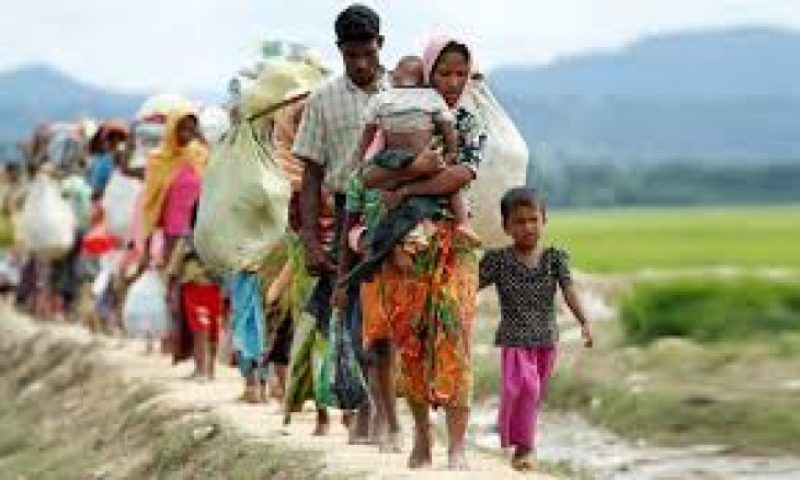
India is home to an estimated 40,000 Rohingya refugees. They fled persecution in Myanmar. They crossed borders with nothing but survival on their minds. Today, they live in informal settlements across New Delhi, Hyderabad, and Jammu. However, without formal legal recognition from the Indian government, their lives remain suspended in a permanent state of uncertainty.
The core problem is documentation. Rohingya refugees carry UNHCR-issued identification cards. These cards are internationally recognized. But Indian employers rarely accept them. Banks reject them. Government services are largely out of reach. Therefore, most Rohingya adults are pushed into the shadows of the informal economy, doing construction work, collecting scrap metal, or selling goods on the street.
Even that fragile income is not guaranteed. Several refugees reported finishing weeks of labor only to be denied their wages. When employers discovered their undocumented status, payment simply stopped. There was no contract to enforce. There was no authority to complain to.
Moreover, the threat of detention adds another layer of fear. Indian authorities have reportedly arrested Rohingya refugees even when they carried valid UN-issued documents. Human rights organizations have documented these cases. For many families, this creates an impossible choice: remain visible and risk arrest, or stay hidden and remain trapped in poverty.
Legal experts note that this uncertainty discourages any form of long-term investment. Rohingya families cannot open bank accounts. They cannot register a small business. They cannot plan beyond the next week. As a result, generation after generation risks falling into the same cycles of informal labor and economic exclusion.
Reports from Muslim Network TV and independent Indian media sources confirm these conditions. Human rights advocates have repeatedly urged the Indian government to establish formal legal protections for stateless refugees living within its borders. Without that recognition, they warn, the Rohingya remain among the most vulnerable populations in South Asia, exposed daily to exploitation, discrimination, and economic marginalization.
Amina Khatoon is one person. But her story is 40,000 stories. Each one carries the same quiet, exhausted plea: to be seen, to be recognized, and to be allowed to live with dignity.
India is home to an estimated 40,000 Rohingya refugees, people who fled mass atrocities and ethnic cleansing in Myanmar’s Arakan region. They now live in informal settlements across New Delhi, Hyderabad, and Jammu, according to reports from Muslim Network TV and independent Indian media sources. They survive on the margins of a country that has never formally agreed to take them in.
The documents they carry, issued by the United Nations High Commissioner for Refugees (UNHCR), serve as a form of proof of their displacement. But in India, those cards open almost no doors. Employers largely refuse to accept them. Banks turn away account applications. Social safety nets built for citizens and recognized migrants remain out of reach. The result is a community stranded in an informal economy that offers little protection and even less stability.
Many Rohingya men and women have no choice but to accept whatever work they can find in construction sites, scrap yards, and on street corners. The work is irregular, the pay is unreliable, and exploitation is common. Several refugees have described being denied wages entirely once employers discovered they lacked documents recognized by the Indian state. There is no formal mechanism to pursue those wages back. There is no authority they can approach without risking their own safety.
“The lack of government-recognized documents makes finding stable work nearly impossible,” said Amina Khatoon, a Rohingya mother of three who has built her life in India over more than a decade. Her words reflect what tens of thousands experience in silence.
The risks do not end with poverty. Refugees holding valid UNHCR registration documents have reportedly been arrested by Indian authorities, according to rights observers. The threat of detention, or deportation back to a country where persecution awaits, hangs over every household. It discourages families from investing in small businesses or any form of long-term livelihood. Why build anything when it can be taken overnight? The poverty that results is not incidental. It is the direct product of legal uncertainty made permanent.
Human rights advocates working with the community are urging India to establish formal protections for stateless refugees and to bring its practices into alignment with international standards on the treatment of displaced persons. Without such measures, they warn, the Rohingya population in India will remain a community exposed to economic marginalization and a target for exploitation by those who know they have nowhere else to turn.
These are not abstract policy concerns. They are the daily reality of real families, people who survived one catastrophe and are now slowly being worn down by another, quieter one. A child growing up in this environment has no clear path to school, no path to healthcare, no path forward of any kind.
The question before India is whether people who have already lost everything will be given a chance to rebuild, or whether the legal void that surrounds them will be allowed to continue consuming what little they have left.