
Cox’s Bazar, Bangladesh
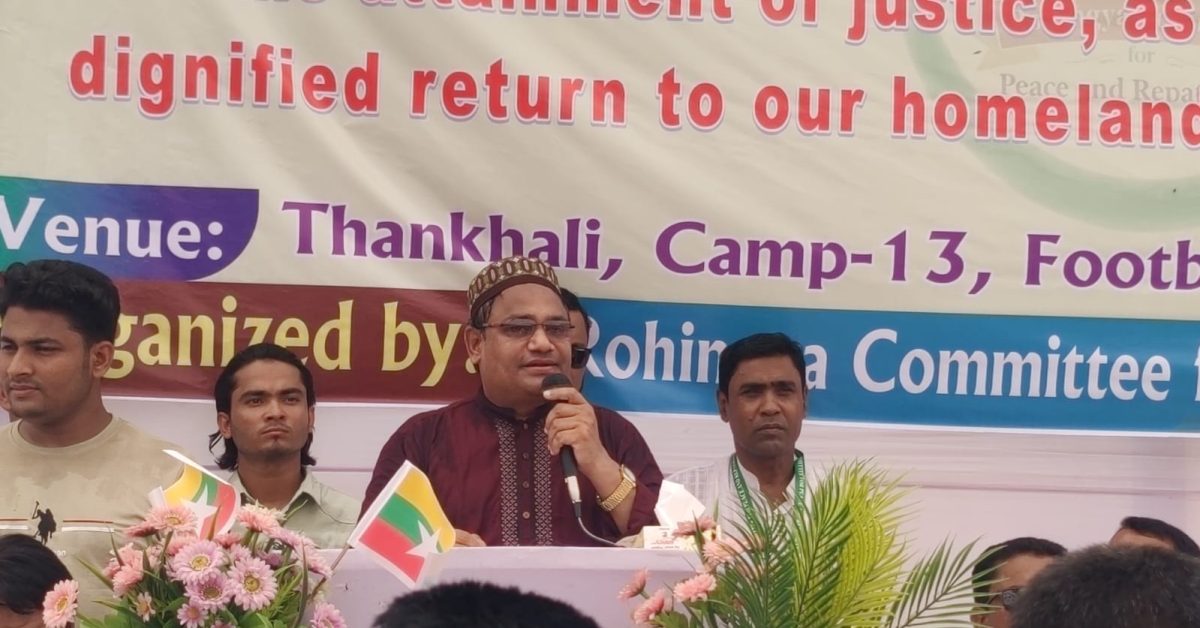
On the morning of Saturday, April 25, 2026, hundreds of Rohingya men, women, and youth gathered at Camp 13 in Thaingkhali, Ukhia, Cox’s Bazar. They came not to protest, not to demand charity. They came to say something simple, something urgent: “We want to go home.”
The gathering was organized by the Rohingya Community for Peace and Rights (RCPR), a social organization working within the camps. The assembly drew members from multiple Rohingya youth and community groups. The message from every speaker was the same. Bangladesh is not home. Arakan is.
Dil Mohammad, the Chairman of RCPR, opened and closed the event. His voice carried the weight of nearly a decade of displacement. He reminded the crowd that every Rohingya sitting in these camps has a name, a village, and a future that belongs to Arakan. He said the people gathered were not refugees by choice. They were forced from their land by violence and terror. One day, he said, every single one of them must return.
The speakers expressed deep gratitude to the government and people of Bangladesh for opening their borders and offering shelter when Myanmar’s military drove the Rohingya out with fire and blood. That generosity, they said, must never be forgotten. However, gratitude is not permanence. Bangladesh is a temporary home, and the Rohingya community knows it.
What they asked for is not complicated. They asked the Bangladesh government to keep pressing the international community. They asked global bodies, the United Nations, the international courts, and foreign governments, to move beyond statements and take real, measurable action toward safe, dignified, and voluntary repatriation to Arakan.
The word “dignified” carried special meaning in that camp ground. Dignity means returning to a place where Rohingya people have citizenship, legal recognition, and protection from further violence. It means going home to rebuilt villages, not ruins. It means safety guaranteed not just on paper but on the ground.
The assembly also turned its attention inward. Leaders called on the youth of the camps to protect themselves from a different kind of danger. Inside the camps, crime has become a quiet crisis. Fights, murders, abductions, drug trafficking, and mobile gambling have pulled some young people into darkness.
The speakers were direct. They said the community must fight this from within. Awareness campaigns, youth engagement, and social accountability are the tools. The future leaders of a free Arakan cannot be built inside a cycle of crime. Therefore, the community must act now, before more young lives are lost to the wrong path.
The youth organizations present responded with visible energy. Several group leaders pledged to carry the message back to their blocks, their tents, their families. The meeting was not just a rally. It was a moment of collective responsibility.
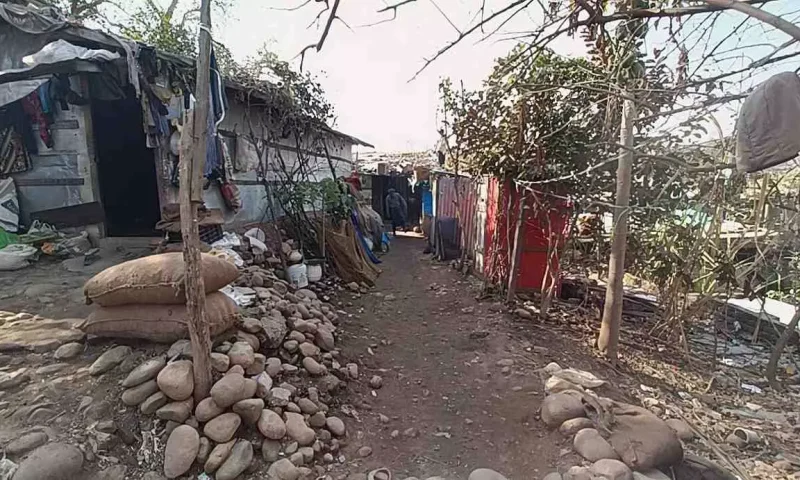
This gathering in Camp 13 reflects something larger. Across the camps of Cox’s Bazar, which shelter more than a million displaced Rohingya, there is a growing, organized demand for return. The Rohingya people are not passive. They are organized, they are vocal, and they are waiting for the world to match their patience with action.
The international community has watched Myanmar burn for years. Reports have been written. Resolutions have been passed. However, the people of Camp 13 are still in Camp 13. The children born here have never seen Arakan. That is the true measure of how much remains undone.
Dil Mohammad closed the assembly with a final call. He asked every Rohingya person to hold onto their identity, their dignity, and their hope. He asked the world to help turn that hope into a journey home.
The crowd dispersed quietly. But their message did not.