Uniondale, Long Island, New York
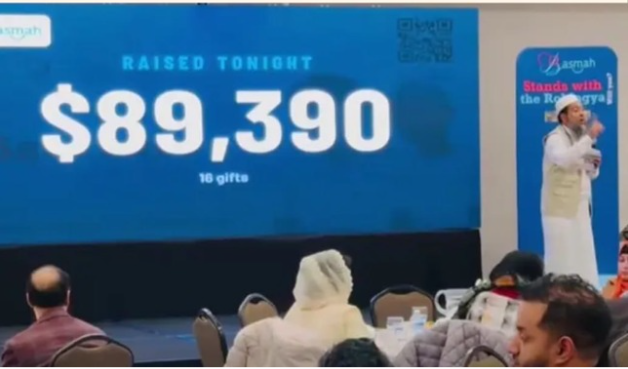
On the evening of 14 November 2026, diaspora donors met in New York for Rohingya aid. Bangladeshi families filled a hall at the Long Island Marriott Hotel in Uniondale. Organizers said the night raised about Tk 11 million. That is roughly 1.10 crore taka, collected in a single day.
Bangladesh American Society of Muslim Aid for Humanity, or BASMAH, hosted the gathering. The group said the full sum will support Rohingya humanitarian needs. Those families now shelter in Bangladesh after fleeing violence in Myanmar. They did not choose the camps.
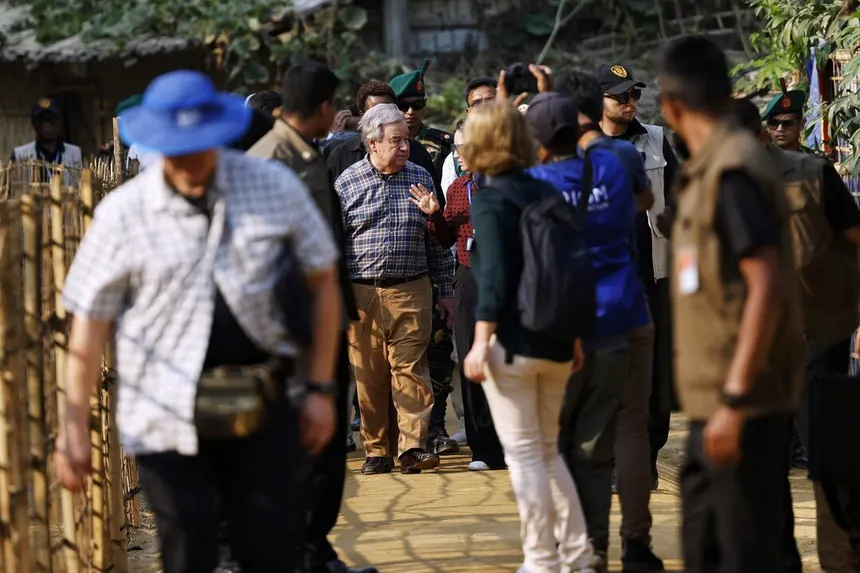
Still, they are waiting on food, care, and a place in class. More than 1.1 million Rohingya refugees live in the settlements around Cox’s Bazar. UN News calls that settlement the largest in the world. Most families trace the 2017 flight, and others have come since then.
A shrinking budget puts Rohingya aid on fewer shoulders
The United Nations says international help for registered Rohingya in Bangladesh has dropped. For 2026, UN agencies and partners asked for $710.5 million. The appeal tries to reach about 1.56 million people. Then Rohingya families in the camps sit at the center of that plan.
The plan also counts nearby Bangladeshi communities in Ukhiya and Teknaf. The 2026 request is 26 percent smaller than the 2025 appeal. Yet officials say it covers only the minimum needed to keep people alive. So private gifts now matter more than they did a few years ago.
Health and education show the squeeze in plain figures. The 2026 plan sets aside about $49.9 million for health. Education is listed at about $52.7 million. Also, food remains the largest slice, at about $247.3 million.
BASMAH has worked in Cox’s Bazar camps for close to 10 years. The group says it runs three medical centers there. It also runs 25 centers for orphans. Then food support sits beside those clinics.
Education programs run alongside the meals. So the new gift has a place to land. It does not need a fresh office or a new slogan. After nearly a decade on those paths, the staff already know which doors open first.
Clinic walls and lesson books sound ordinary. However, in a funding squeeze, they are not. Health is one of the first services to thin out when grants shrink. Classes fall close behind.
Orphans feel that loss faster than most. A child born in the camps in 2017 is now of school age. Yet aid cuts do not wait for that child to finish growing. A missed meal and a missed teacher can land in the same month.
About Tk 11 million will not stock every warehouse in the camps. However, it can keep a clinic shift paid. A food line can keep moving for a while. A small classroom can hold one more seat.
Donors on Long Island seemed to understand that limit. Still, they gave anyway. There is a caution in the number. One evening is not a funding strategy.
If governments keep cutting, camp families will feel it in the next ration week. Diaspora groups can soften that blow. They cannot carry the whole response alone. Therefore, this gift should push larger donors, not excuse them.
Uniondale’s donors do not sit in diplomatic posts. Workers, parents, and neighbors took those seats instead. Many have watched the camps on their phones for years. Then on Saturday they put money on the table.
Rohingya aid of this kind rarely makes a summit headline. Instead, it shows up as a prescription, a packed lunch, or a notebook. BASMAH says that is where this money will go. Later, the test will be simple.
Hope here should stay modest. The camps are still short of what the UN plan says they need. Yet a room of diaspora donors refused to treat that gap as someone else’s problem. They raised about Tk 11 million in one day for Rohingya aid.
For families waiting in Cox’s Bazar, that sum is not the whole answer. It is proof that someone outside the fence is still counting them.