Maungdaw July 17, 2026
The systemic destruction of a community often begins not with weapons, but with administrative laws. For decades, the Rohingya population in northern Arakan lived under a tight network of state-enforced restrictions. These rules controlled their movement, marriages, and access to medical care. The foundation for this systemic oppression was the 1982 Citizenship Act, which stripped millions of their legal rights.
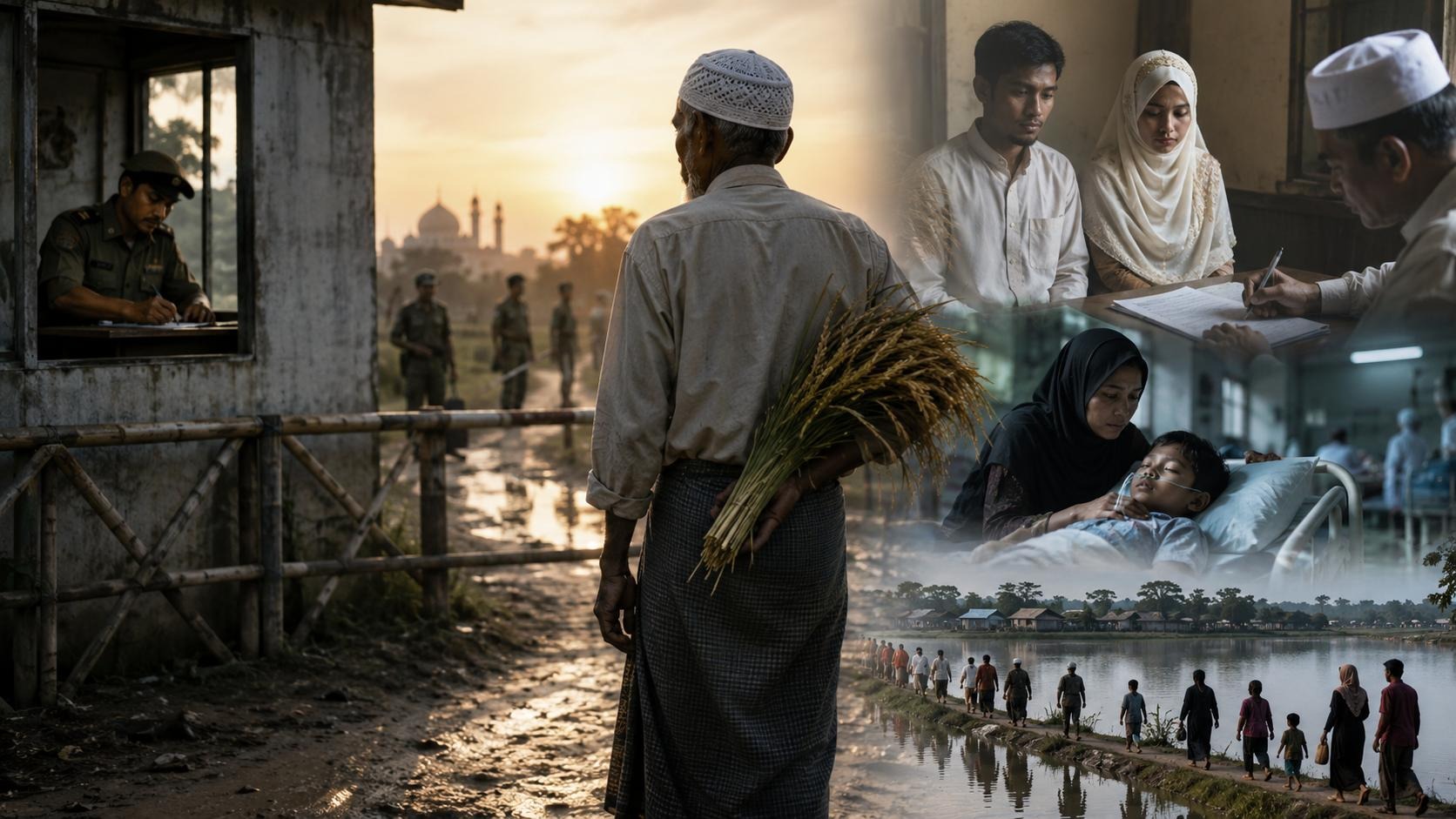
A routine trip to the local market illustrates the severity of these restrictions. A farmer in northern Arakan could not simply walk thirty minutes to sell his grain. He had to visit a local administrative office first to secure an official travel permit. If the administration denied the request, the farmer could not sell his crops, leaving his family without income. This system turned basic survival into a daily bureaucratic battle.
Human rights organizations have documented how these travel limits destroyed the local economy. Farmers could not ship goods to profitable markets. Laborers lost jobs in neighboring towns because they could not cross checkpoints. Students regularly missed classes due to arbitrary permit delays. Therefore, the restriction of movement functioned as an economic blockade against civilians.
Family life faced similar administrative barriers. In northern Arakan, residents had to request state permission before getting married. The approval process often took months and required heavy financial bribes. Many couples could never secure the paperwork, which prevented them from starting families. This policy allowed the state to control the growth and social structure of the population.
Healthcare access was equally compromised by these regulations. Patients requiring urgent medical care could not travel freely to regional hospitals. Pregnant women and elderly citizens faced life-threatening delays at internal checkpoints while waiting for travel approvals. International investigators confirmed that numerous preventable deaths occurred because patients were blocked from leaving their villages.
These combined measures created a system of segregation without physical walls. Checkpoints, permit offices, and discriminatory laws formed an invisible prison for the population. This systematic deprivation demonstrates how administrative tools can weaken a community over generations. The current crisis cannot be understood without recognizing this history of state-sponsored restriction.